











Photo by Antranik Tavitian/Getty Images
The Briefing:
- Senators Jacky Rosen (D-NV) and Alex Padilla (D-CA) introduced the Travel Without Fear Act on November 18, 2026, barring ICE from conducting warrantless civil immigration arrests at or near airports without a judicial warrant tied to a felony conviction.
- The bill targets a TSA-ICE data-sharing pipeline that produced more than 800 arrests between January 2025 and February 2026, according to internal agency records reviewed by Reuters.
- Both the Senate measure and a parallel House bill face long odds in Republican-controlled chambers, but their introduction forces an overdue public debate over whether U.S. airports have become de facto immigration checkpoints.
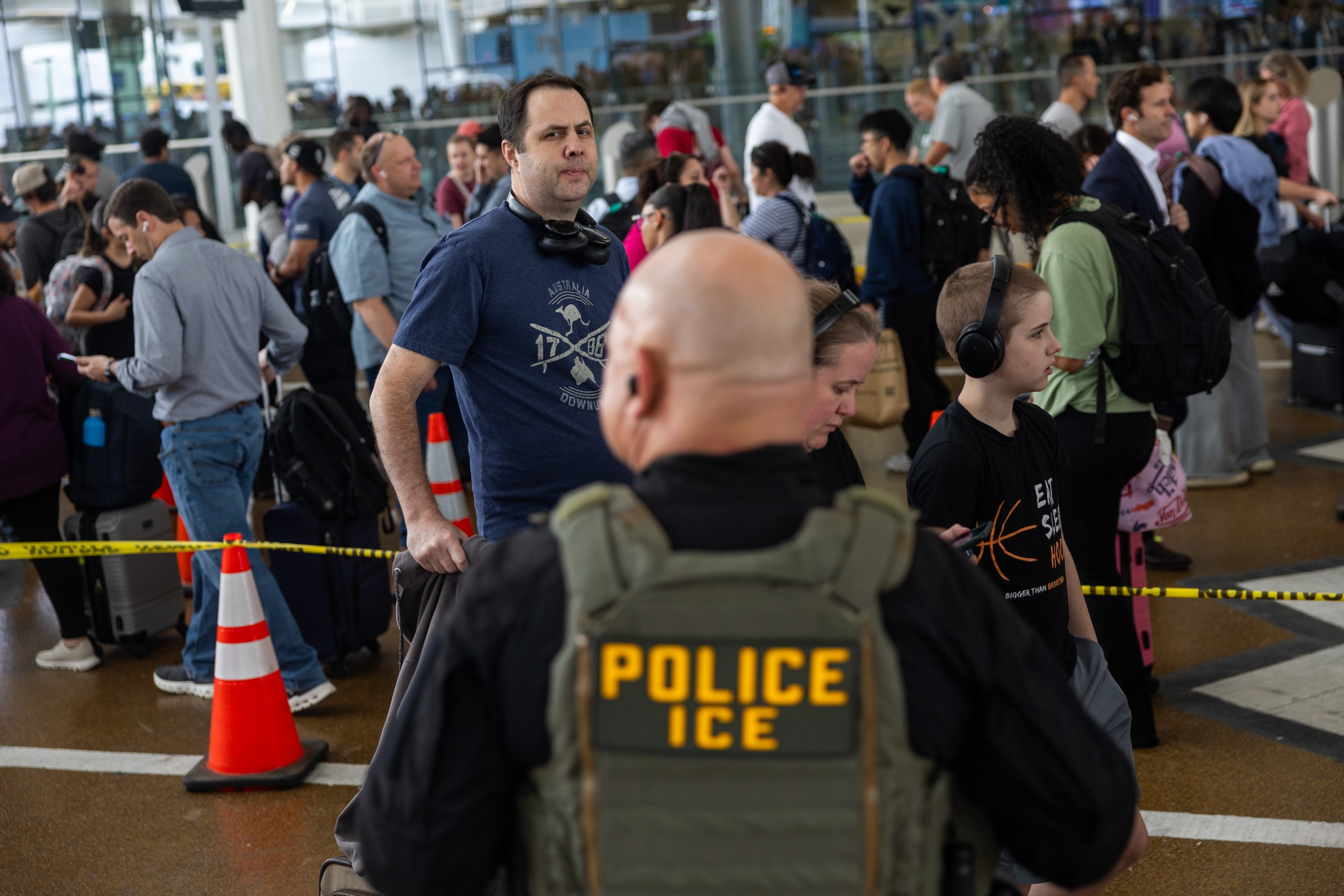
Three Senate Democrats have introduced legislation to push federal immigration agents out of U.S. airports unless they carry a judicial warrant connected to a felony conviction — a direct challenge to enforcement practices that have quietly transformed air terminals into the newest front of the Trump administration’s mass deportation campaign.
A Senate Bill With a Clear Target
Senators Jacky Rosen and Alex Padilla introduced the Travel Without Fear Act on Wednesday, November 18, barring Immigration and Customs Enforcement from conducting civil immigration operations at or near airports unless agents present a warrant issued by a federal judge and linked to a felony conviction. Senator Tammy Duckworth of Illinois signed on as a co-sponsor.
The distinction between civil and criminal violations is central to the bill’s argument. Civil infractions — such as an expired visa, a lapsed work permit, or a pending asylum claim — carry no criminal penalty, yet they have served as the basis for hundreds of airport detentions since early 2025. The legislation would also require ICE to confirm that any target is not within an authorized period of stay before proceeding with an arrest.
“That’s why I introduced the Travel Without Fear Act today — to stop ICE’s reckless civil immigration enforcement in airports,” Rosen said when unveiling the bill last week.
The Data Pipeline Behind 800+ Arrests
The legislation takes direct aim at an intelligence arrangement that has operated largely beneath public scrutiny. Internal ICE data reviewed by Reuters shows that the Transportation Security Administration provided records on more than 31,000 travelers to immigration agents between the start of Trump’s second term and February 2026 — with more than 800 arrests linked to those referrals. Reuters was unable to confirm how many arrests took place inside airport terminals, noting that TSA tips were often most useful for predicting flight schedules rather than locating targets at the gate.
The formal legal framework behind that arrangement did not enter public view until July 28, 2026, when government watchdog American Oversight released a Memorandum of Agreement — signed by TSA and ICE in May 2025 — obtained through Freedom of Information Act litigation. The New York Times had first reported in December 2025 that TSA was forwarding passenger names and birth dates to ICE on a recurring basis. When the MOA became public, it appeared to contradict sworn congressional testimony by then-Acting TSA Administrator Ha Nguyen McNeill, who told lawmakers that the agency does not send data to ICE but only assists ICE in checking against TSA’s own records.
The Travel Without Fear Act would sever that pipeline, banning all exchanges of passenger data between TSA and ICE for civil immigration enforcement unless a judge individually authorizes it for a named target.
Airlines Already Pushing Back
The legislative push reflects mounting frustration within the aviation industry itself. Airlines including Southwest and JetBlue have sought to slow detentions by demanding that ICE provide documentation before receiving customer data. The bill would go further: it would require ICE to give airports and airlines advance notice before any enforcement operation, and codify a publicly accessible online database tracking detainee locations — mandating updates within six hours of any custody change. That provision directly addresses a core complaint from immigration attorneys and families who have reported being unable to locate detained relatives for days after terminal arrests.
The Tlaib Bill: A Parallel Effort in the House
The Senate measure joins a House counterpart that has sat in committee since August. Representative Rashida Tlaib (D-MI) introduced the No TSA Data for ICE Act on August 3, 2026, which would strip federal immigration officials of access to air travelers’ screening records, travel history, and personally identifiable information. The bill also targets Mobile Fortify — an ICE smartphone application that uses a phone camera to capture facial images and fingerprints for real-time biometric identification — barring its use for immigration enforcement at airports. The measure launched with 25 Democratic co-sponsors and faces no viable path through the Republican-controlled House.
Photo by Justin Sullivan/Getty Images
The White House Is Not Blinking
The Trump administration has signaled no intention of reversing course. The Department of Homeland Security argued in a written statement that “federal law explicitly authorizes” ICE to operate at airports and even board aircraft at ports of entry. TSA, responding to the Tlaib bill, went further — invoking the September 11 attacks to defend its data-sharing arrangement as a national security tool. That framing drew fierce pushback from Democratic lawmakers, who argued that the memory of a terrorist attack was being weaponized to justify sweeps against immigrants with no criminal record and no link to any security threat.
Who Is Actually Being Arrested
At the core of the debate is a contested question about enforcement targets. An ICE source, cited by Tlaib’s office, described air travelers as “easy targets,” with agents using terminal operations to meet daily arrest quotas — detaining people navigating active visa petitions, residency applications, or pending asylum claims rather than individuals with criminal histories. That characterization — enforcement directed not at lawbreakers, but at immigrants actively working within the legal system — has become the central argument for both bills, and the factor most likely to determine whether either attracts bipartisan support in the Senate.
Both measures remain in committee. With Republican majorities in both chambers, neither is expected to advance without a significant shift in the political landscape — but their introduction places squarely on the public record a contested question about what role, if any, America’s airports should play in the country’s immigration enforcement architecture.
© {{Year}} Latin Times. All rights reserved. Do not reproduce without permission.