








Illinois welcomed approximately 115 million domestic and international visitors in 2025, generating a record-breaking $50.2 billion in visitor spending and a total economic impact exceeding $88 billion.
The Shift Toward Regional Exploration
While Chicago has long served as the primary gateway for international arrivals, a significant trend is emerging: travelers are no longer treating the city as a final destination, but as a starting point. Data from the Illinois Governor’s Office and the Illinois Department of Commerce and Economic Opportunity reveals a strategic pivot toward “bleisure” travel and regional discovery.
The “Middle of Everything” campaign has been a primary catalyst for this dispersion of tourism. By positioning the state as a versatile hub for both urban and rural experiences, the initiative generated approximately 2.78 million additional trips and $904 million in visitor spending. This shift indicates a growing preference for “complete journeys”—itineraries that blend high-density urban culture with slow-travel experiences in vineyards and historic small towns.
Economic Engines Beyond the Skyline
The financial scale of this boom is unprecedented. The $50.2 billion in visitor spending marks the first time Illinois has crossed the $50 billion threshold, representing a 3.5% increase over the previous year. This surge has translated into approximately $4.9 billion in direct state and local tax revenue, providing a critical funding stream for public services and regional infrastructure.
While Chicago’s heavy hitters—Millennium Park, Navy Pier, the Art Institute of Chicago, and the signature river architecture cruises—continue to draw millions, the economic benefits are now filtering into rural counties. This redistribution of wealth supports local entrepreneurship and sustains small businesses in areas that were previously overlooked by the mainstream tourism circuit.
Cultural and Environmental Value: The New Frontiers
For the visitor, the real impact of this growth is the accessibility of Illinois’ natural and historic assets. The state is successfully rebranding itself from a “fly-over” region to a destination for active discovery.
The Rise of Nature-Based Tourism
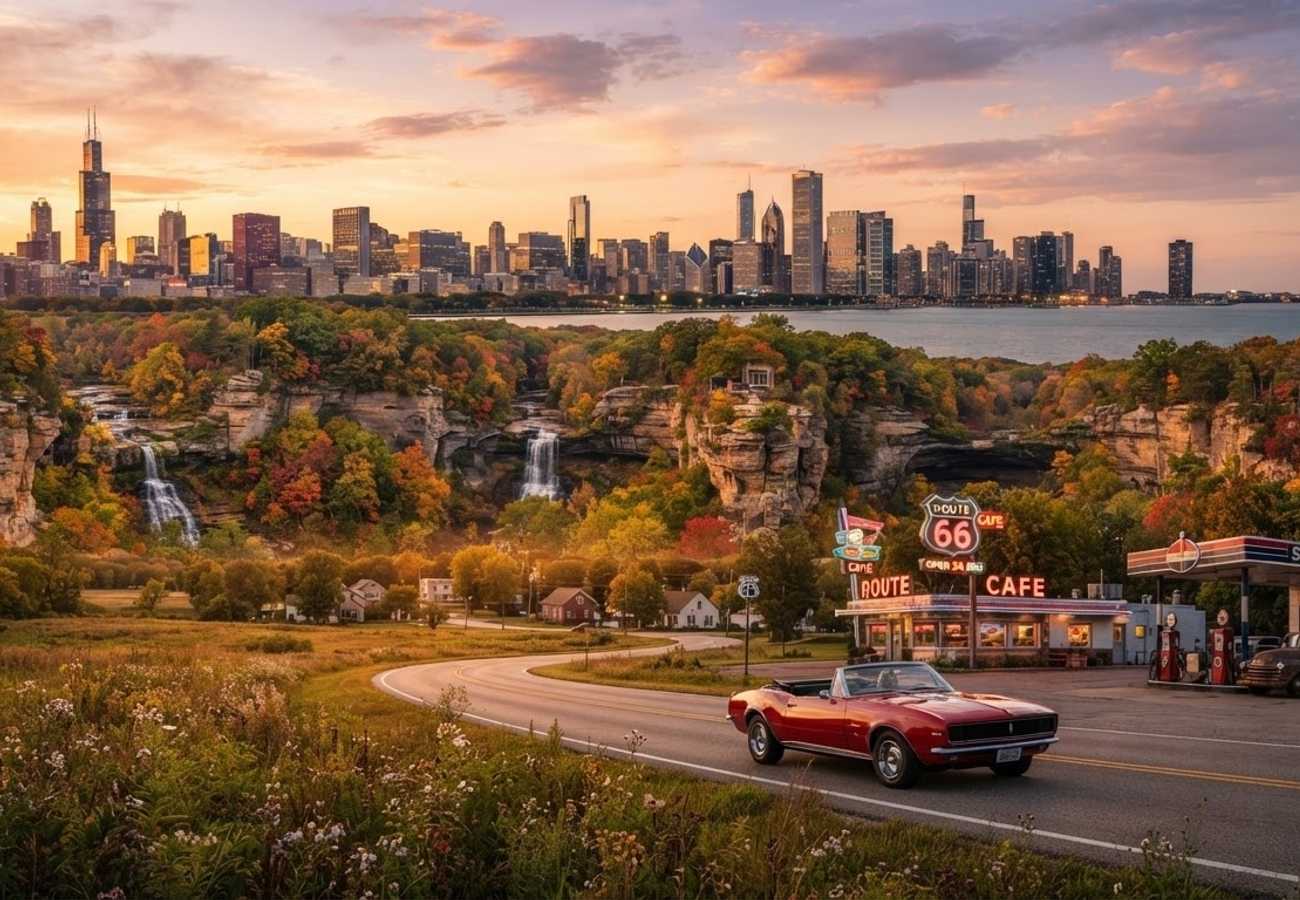
Southern Illinois is currently undergoing a transformation into a premier outdoor hub. Shawnee National Forest has emerged as a cornerstone of this movement, offering dramatic rock formations and extensive hiking trails that appeal to adventure travelers seeking an alternative to the concrete jungle. Similarly, Starved Rock State Park continues to draw crowds with its canyon landscapes and waterfalls, emphasizing the state’s commitment to preserving its unique geological heritage.
Heritage and the Open Road
The investment in Route 66 celebrations and the Illinois America 250 programmes has revitalized heritage tourism. Because the legendary highway begins in Chicago and winds through the heart of the state, it serves as a physical link between urban luxury and authentic Americana. This focus on “story-driven” travel allows small communities to showcase local history while capturing a share of the $88 billion total economic impact.
Visitor Insider Tips
To experience Illinois beyond the tourist traps, consider these local strategies:
- The “Off-Peak” Window: Visit Shawnee National Forest and Starved Rock during the mid-week shoulder seasons (late September or May) to avoid the heavy weekend crowds and experience the silence of the canyons.
- Wine Trail Etiquette: When exploring the regional vineyards, prioritize “farm-to-glass” establishments. Many local wineries offer tasting flights paired with regional cheeses produced within the same county.
- Route 66 Slow-Down: Instead of rushing through the highway, stop in the smaller, non-commercialized towns. Look for local diners that have operated for over 50 years; these are the true keepers of the state’s heritage.
- Urban-to-Rural Transition: Use the rail network to move from Chicago to Springfield. It is a more sustainable way to transition from the skyline to the historic sites of Abraham Lincoln.
Tourism Outlook
The long-term trajectory for Illinois suggests a move toward a more balanced tourism ecosystem. By diversifying its appeal—from the high-culture galleries of Chicago to the rugged trails of the south—the state is mitigating the risk of over-reliance on a single urban center. Future growth is expected to lean heavily into sustainable travel practices and the expansion of eco-tourism initiatives, ensuring that the record-breaking visitor counts of 2025 do not compromise the natural landscapes that now attract them.
Illinois is no longer just a stopover; it is a destination where the American road trip meets global urbanism.