
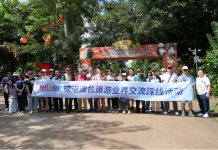


In late July, I participated in an accessible tourism fam trip across three cities: Bogotá, Barranquilla and Cartagena.
The nine-day tour, which was conducted in partnership with Pro Colombia and DMC Impulse Travel Colombia, was specifically designed for travellers with both visible and non-visible disabilities.
Along with inspecting hotels and exploring attractions, we met DMCs from the Latin America region and engaged with organisations committed to making travel more inclusive. Here’s everything I discovered on the trip.
Accommodation
One of the most valuable aspects of the trip was visiting hotels to assess accessibility from multiple perspectives.
Accessibility is not simply about ramps and lifts. For many neurodivergent travellers, thoughtful communication, calm environments and informed staff can be equally important.
The Hilton Bogotá Corferias had a quiet room by the foyer, intentionally made to be out of the way. It’s ideal for neurodivergent people to calm down or prepare for a journey if they don’t want to be in a loud setting like the adjacent restaurant. I myself used it for a good 45 minutes as I felt overwhelmed by being in a group setting for so long with a lack of sleep and 6-hour jet lag. So it was nice to have a small break to decompress.
At the Hilton Hotel in Cartagena, a nice touch was that portable speakers weren’t allowed in the pool area, minimising noise from loud music. The same could be said at Hotel La Caribe as the pool area was so peaceful that all you could hear were the splashing and swim strokes of swimmers.
Adjacent to it was a courtyard where people could just chill, study, read, whatever they wanted without any distraction. There was also a separate quiet room for kids where they could play pool, table tennis, play board games and colouring books.
It also included ramps as well as stairs at the entrance, lounge and pool areas, an accessibility lift from the hotel restaurant to the pool, and quiet rooms far from the lifts that felt almost soundproofed from people walking in the corridor.
Experiences
Over the course of the nine-day trip, we visited Bogotá, Colombia’s mountainous capital, as well as the coastal cities of Barranquilla and Cartagena.
The thinner air was the first thing that greeted me in Bogotá. At approximately 2,640 metres (8661 feet) above sea level, this historic capital is one of the highest-altitude cities on Earth.
The reduced oxygen levels can be challenging for visitors, so caution should be taken – especially if arriving directly from sea level.
Another thing that might leave you breathless in Bogotá is the architecture.
One particular highlight was the Gold Museum, which showcased the incredible craftsmanship of Colombia’s Indigenous communities and remains one of the finest museums of its kind anywhere in the world.
The La Candelaria area, which is known for its colourful cobblestone streets, was also well worth a visit.
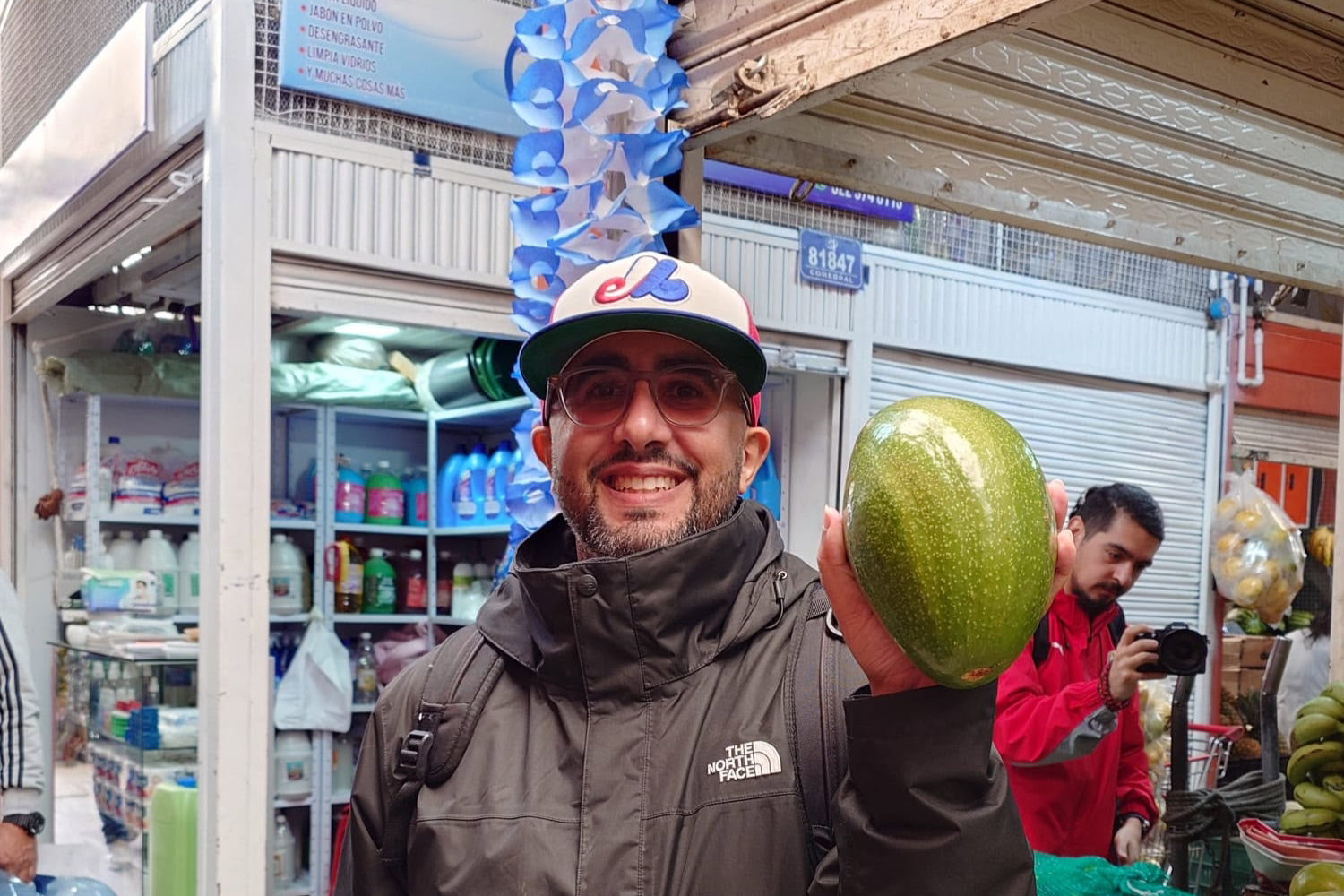
The following day, we headed to the Paloquemao Fruit Market, a bustling bazaar known for its diverse variety of fruits and vegetables.
Here you can buy everything from pitayas, which are small dragon fruits with a pear flavour, to mangosteen, a sweet-and-sour fruit with a deep purple rind. We also sampled Pandebono, a popular hot cheese bread traditionally enjoyed with a cup of fresh Colombian coffee.
The Paloquemao Fruit Market has ramped entries and accessible bathrooms, but navigation can be complicated by the crowds and bumpy aisles. Visiting at off-peak times, such as late morning, is therefore advisable.
A one-hour flight north took us to Barranquilla, the hometown of Sofia Vergara and Shakira. Our stay here was very brief, but gave us enough time to visited Puerto Mocho, which advertises itself as an accessible beach.
Here you’ll find boardwalks, adapted bathrooms and amphibious chairs. There’s also beach matting, enabling people with reduced mobility to cross the sand and reach the waterfront more comfortably.
We felt there was still work to be done, however, as there was no ramp to take wheelchair users to the seating areas on the beach itself.
We were more impressed by Mallorquín Swamp Ecopark, a large coastal lagoon on Colombia’s Caribbean coast. This ecopark features flat, paved entryways, wide boardwalks and ramps, and, as the home to more than 150 bird species, is the perfect spot for watching our winged friends.
Driving two hours west took us to our final stop on the trip, Cartagena, a preserved fortress city. Here we scaled the walls of the UNESCO Colonial Old Town, which dates back to the 1600s, before enjoying a much-needed coffee tasting. It’s important to note that, though the exterior walkways next to the walls are mostly flat, it isn’t possible to navigate the top of the walls using a wheelchair.
Travelling with an accessible group
For me, the biggest highlight of the trip was the group itself.
Our party consisted of travellers with different accessibility requirements and lived experiences, and this created an environment where accessibility could be discussed more openly.
Watching different people engage with the same destination in different ways reinforced an important lesson: there is no single definition of accessibility.
True inclusion means recognising that every traveller’s needs are different. The willingness of both ProColombia and Impulse Travel to listen, adapt and encourage discussion throughout the journey demonstrated a genuine commitment to improving accessibility across Colombian tourism.