




Published on
July 20, 2026
Image generated with Ai
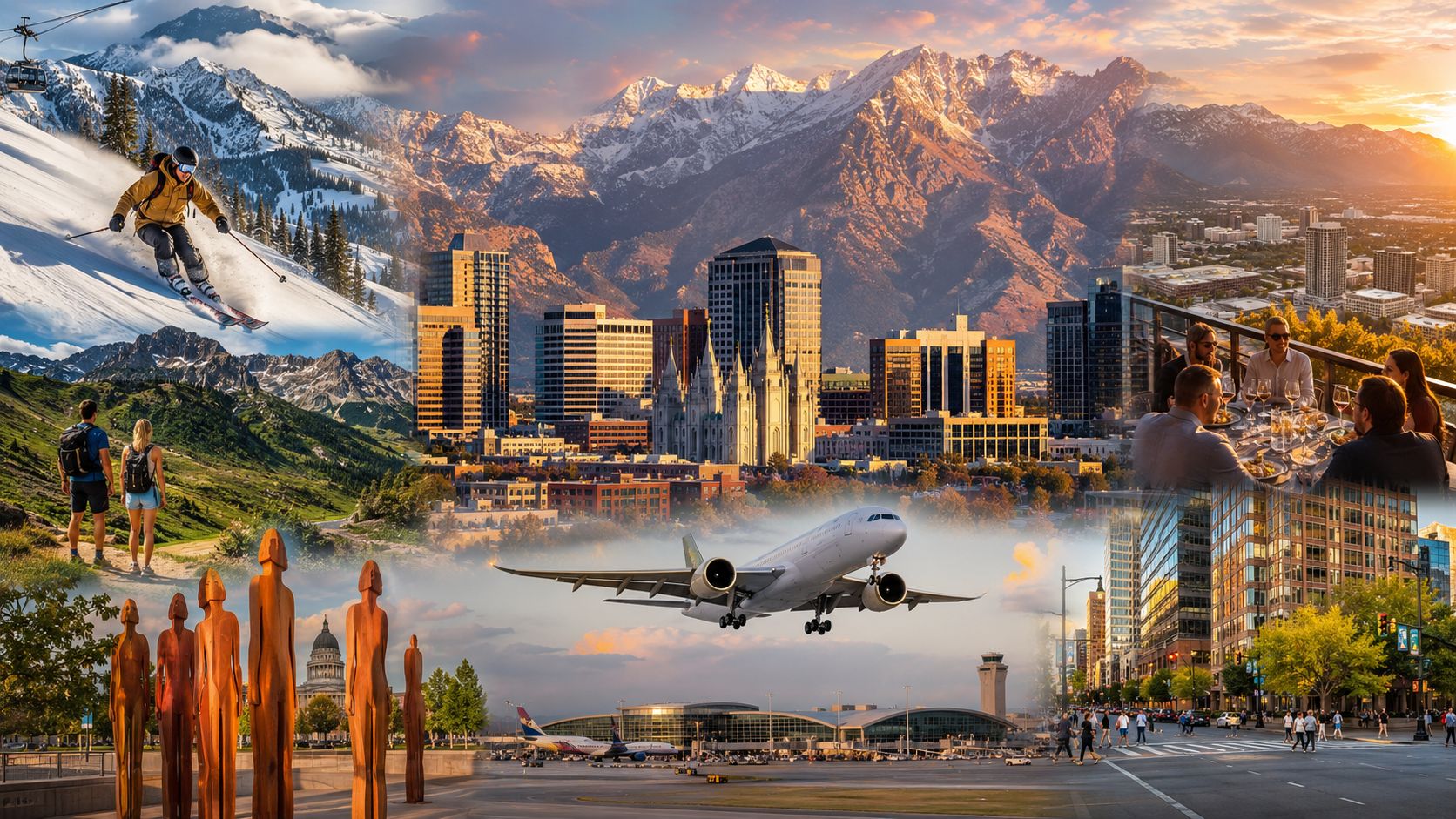
Salt Lake City has launched a bold new destination branding initiative that aims to redefine how travellers perceive Utah’s capital, positioning it as “America’s Mountain City” while capitalising on its exceptional proximity to world-class ski resorts, outdoor recreation, cultural attractions and a rapidly expanding culinary landscape. The new Salt Lake City tourism campaign arrives at a strategically significant moment as the destination prepares for the 2034 Winter Olympic and Paralympic Games, providing tourism authorities with a long-term platform to elevate international visibility, attract higher visitor spending and strengthen Utah’s position within North America’s competitive travel market. The campaign emphasises that visitors can seamlessly combine metropolitan experiences with alpine adventures within a single day, offering a distinctive value proposition rarely matched by other US cities.
Beyond branding, the initiative reflects the growing economic importance of tourism across Salt Lake County. Direct visitor spending reached approximately US$4.2 billion in 2024, supporting more than 30,000 tourism-related jobs while contributing significantly to local tax revenues and regional economic development. By highlighting improved accessibility, internationally recognised restaurants, year-round outdoor recreation and expanding sporting attractions, the Salt Lake City tourism campaign seeks to broaden the city’s appeal beyond traditional winter visitors and position the destination as a four-season travel hub for domestic and international markets alike.
Salt Lake City Repositions Itself as America’s Mountain City
Destination branding has become increasingly competitive across North America, where cities are seeking stronger identities to differentiate themselves in an evolving tourism marketplace. Salt Lake City’s latest campaign shifts the narrative away from conventional mountain destination marketing by promoting the seamless integration of urban sophistication and outdoor adventure.
Instead of presenting mountain recreation as a standalone attraction, tourism authorities are promoting an experience where travellers can enjoy museums, fine dining, rooftop restaurants, sporting events and shopping before reaching internationally renowned ski resorts and hiking trails in less than an hour.
Advertisement
Advertisement
This positioning strengthens Salt Lake City’s identity as one of the few major metropolitan destinations where urban tourism and mountain recreation coexist within remarkably short travelling distances.
For international visitors planning multi-destination itineraries across the western United States, this accessibility becomes a powerful selling point, particularly as travellers increasingly seek flexible holidays combining culture, gastronomy, nature and adventure.
Advertisement
Advertisement
Why the New Salt Lake City Tourism Campaign Matters
The campaign represents far more than a marketing slogan.
Global tourism has shifted towards experience-led travel, with visitors prioritising destinations that offer multiple activities without requiring extensive transfers or complicated logistics. Salt Lake City’s location between an international airport, downtown business district and the Wasatch Mountains naturally supports this emerging travel trend.
The campaign also reinforces several major competitive advantages:
| Tourism Advantage | Visitor Benefit |
|---|---|
| Downtown to ski resorts in around 40 minutes | Same-day city and mountain experiences |
| International airport located close to downtown | Faster arrival and reduced transfer times |
| Year-round outdoor recreation | Four-season tourism opportunities |
| Expanding culinary scene | Stronger appeal for food tourism |
| Olympic legacy | Increased global destination recognition |
| Professional sports and cultural venues | Broader visitor experiences beyond skiing |
These strengths collectively position Salt Lake City differently from destinations where visitors must choose between urban exploration and mountain holidays.
Tourism Has Become One of Salt Lake County’s Largest Economic Engines
The campaign is supported by increasingly strong tourism performance.
According to economic data published by the University of Utah’s Kem C. Gardner Policy Institute, Salt Lake County generated approximately US$4.2 billion in direct visitor spending during 2024.
Advertisement
Advertisement
The economic contribution extends well beyond hotels and attractions.
Tourism supports employment across accommodation providers, restaurants, transportation companies, retail businesses, recreation operators, event venues and cultural institutions.
The latest figures demonstrate tourism’s substantial regional impact.
| 2024 Tourism Indicator | Value |
|---|---|
| Direct visitor spending | US$4.2 billion |
| Direct tourism-supported jobs | Over 30,000 |
| Share of Utah visitor spending | Approximately one-third |
| Contribution to local sales tax | Nearly 15% |
These statistics underline why destination branding has become an important economic development strategy rather than simply a promotional exercise.
Olympic Legacy Continues to Shape International Tourism Strategy
Salt Lake City’s tourism ambitions extend well beyond domestic travel.
The destination will once again welcome the world during the 2034 Winter Olympic and Paralympic Games, marking the second time the city hosts the Winter Olympics following the successful 2002 edition.
Advertisement
Advertisement
Large sporting events typically generate several tourism advantages:
- Increased international media exposure
- Infrastructure improvements
- Airport and transport upgrades
- Long-term destination awareness
- Growth in conference and business tourism
- Stronger investment confidence
Many destinations experience sustained visitor growth long after Olympic events conclude, particularly when tourism authorities successfully convert global exposure into long-term destination marketing.
For Salt Lake City, the new campaign effectively begins building international recognition years before the Games officially commence.
The Wasatch Mountains Remain the City’s Greatest Competitive Asset
Few American cities enjoy immediate access to mountain landscapes comparable to Salt Lake City.
The nearby Wasatch Range offers visitors an extensive variety of experiences throughout the year.
During winter, internationally recognised ski resorts attract visitors from across North America, Europe and Asia.
Advertisement
Advertisement
During warmer months, the mountains transform into a destination for hiking, mountain biking, climbing, wildlife viewing and scenic drives.
Popular outdoor activities include:
| Season | Popular Experiences |
|---|---|
| Winter | Skiing, snowboarding, snowshoeing |
| Spring | Wildflower hikes, photography |
| Summer | Hiking, cycling, camping |
| Autumn | Fall foliage, scenic drives, trekking |
This year-round diversity allows tourism authorities to reduce seasonal dependency while encouraging longer visitor stays.
Food Tourism Has Become an Increasingly Important Growth Driver
Although Utah has traditionally been associated with outdoor recreation, Salt Lake City’s culinary reputation has expanded considerably over recent years.
Restaurants have received increasing national recognition while local chefs continue attracting attention through prestigious culinary awards and industry accolades.
Food tourism has become one of the fastest-growing travel segments globally.
Advertisement
Advertisement
According to the UN World Tourism Organization (UN Tourism), gastronomy increasingly influences destination selection, visitor satisfaction and repeat travel behaviour.
Salt Lake City’s evolving restaurant sector now complements rather than competes with its outdoor identity.
Visitors can combine mountain excursions with locally inspired dining experiences featuring regional ingredients, international cuisine and innovative hospitality concepts.
This diversification broadens appeal among luxury travellers, conference delegates and international tourists seeking authentic local experiences.
Accessibility Strengthens Salt Lake City’s Tourism Appeal
Accessibility often determines whether travellers choose one destination over another.
Salt Lake City’s transport network offers several operational advantages.
Advertisement
Advertisement
Salt Lake City International Airport provides extensive domestic connectivity while expanding international services continue strengthening global access.
Downtown accommodation, mountain highways and recreational areas remain relatively close compared with many competing destinations.
For travellers, reduced transfer times translate into:
| Accessibility Benefit | Tourism Value |
|---|---|
| Short airport transfers | More holiday time |
| Efficient road network | Easier multi-attraction itineraries |
| Nearby mountain resorts | Reduced transport costs |
| Compact city centre | Walkable visitor experiences |
This convenience increasingly appeals to international visitors with shorter holiday durations.
How Salt Lake City’s Branding Has Evolved Over Time
The latest campaign represents another stage in Salt Lake City’s evolving destination identity.
Historically, the city became known as the “Crossroads of the West”, reflecting its importance during the expansion of America’s transcontinental railway network.
Advertisement
Advertisement
More recently, tourism marketing introduced “West of Conventional”, emphasising the city’s distinctive blend of metropolitan life and outdoor recreation.
The latest transition towards “America’s Mountain City” narrows the branding focus while creating a more memorable identity for international audiences unfamiliar with regional geography.
| Previous Brand | Primary Focus |
|---|---|
| Crossroads of the West | Historic transport hub |
| West of Conventional | Urban and mountain contrasts |
| America’s Mountain City | Seamless city and alpine experiences |
The progression reflects changing traveller preferences and increasingly competitive destination marketing worldwide.
Changing Traveller Behaviour Favours Multi-Experience Destinations
Travel demand has evolved considerably since the pandemic.
Modern travellers increasingly prioritise destinations capable of delivering multiple experiences during a single trip.
Several industry trends support Salt Lake City’s positioning.
Advertisement
Advertisement
Remote working has encouraged longer stays.
Adventure tourism continues expanding.
Wellness travel increasingly incorporates outdoor environments.
Short city breaks now often include nearby nature experiences.
According to UN Tourism, travellers increasingly seek destinations offering authentic local culture alongside nature-based activities.
Salt Lake City’s combination of museums, sporting events, restaurants, mountain landscapes and year-round recreation aligns closely with these evolving consumer preferences.
Advertisement
Advertisement
Practical Information for Visitors Planning a Salt Lake Holiday
Travellers considering Salt Lake City should understand how seasonal conditions influence travel planning.
| Topic | Practical Information |
|---|---|
| Best skiing | December to March |
| Hiking season | May to October |
| Peak foliage | September to October |
| Summer temperatures | Warm days, cooler mountain evenings |
| Nearest airport | Salt Lake City International Airport |
| Local transport | Rental cars, public transport, rideshare |
Visitors intending to explore mountain areas should monitor weather forecasts, particularly during winter when snowfall can affect driving conditions.
Appropriate outdoor clothing remains essential throughout the year because mountain weather changes rapidly.
Broader Implications for the North American Tourism Industry
The Salt Lake City tourism campaign illustrates how destination marketing continues shifting away from traditional advertising towards experience-led storytelling.
Rather than promoting isolated attractions, successful tourism organisations increasingly highlight integrated visitor journeys.
Other mountain cities—including Denver, Vancouver and Innsbruck—have similarly strengthened marketing around lifestyle experiences rather than individual landmarks.
Advertisement
Advertisement
Salt Lake City’s approach reflects wider industry recognition that travellers value convenience, authenticity and flexibility as much as iconic attractions.
By combining urban exploration with internationally recognised outdoor recreation, the destination strengthens its competitiveness across leisure, meetings, incentive travel and international tourism markets.
Salt Lake City’s Tourism Vision Extends Beyond the Olympics
Although preparations for the 2034 Winter Olympics provide an important backdrop, the campaign is designed to generate lasting tourism benefits well beyond the event itself.
The destination is investing in an identity capable of attracting visitors throughout every season while supporting economic resilience across hotels, restaurants, attractions, transport providers and recreation businesses.
As international travel continues recovering and travellers increasingly seek destinations delivering diverse experiences within compact geographic areas, the Salt Lake City tourism campaign positions Utah’s capital as one of America’s most accessible gateways to mountain adventure without sacrificing the comforts and attractions of a modern city. Combined with strong tourism spending, expanding culinary recognition, world-class outdoor recreation and future Olympic exposure, the initiative represents a long-term strategy to elevate Salt Lake City’s standing within the global tourism landscape.
FAQs
1. What is Salt Lake City’s new ‘America’s Mountain City’ tourism campaign?
The new branding campaign positions Salt Lake City as “America’s Mountain City”, highlighting its unique ability to combine a vibrant urban experience with easy access to world-class mountain recreation. The initiative promotes the city’s outdoor adventures, cultural attractions, dining scene and proximity to renowned ski resorts.
Advertisement
Advertisement
2. Why has Salt Lake City launched this new tourism campaign?
The campaign aims to strengthen Salt Lake City’s global tourism appeal, attract more domestic and international visitors, boost visitor spending, and build momentum ahead of the 2034 Winter Olympic and Paralympic Games. It also showcases the city’s year-round tourism offerings beyond winter sports.
3. How close are the Wasatch Mountains and ski resorts to downtown Salt Lake City?
Many of the Wasatch Mountain resorts and outdoor recreation areas are approximately 40 minutes by road from downtown Salt Lake City, allowing visitors to enjoy both city attractions and mountain experiences within the same day.
4. How important is tourism to Salt Lake County’s economy?
Tourism is a major economic driver for Salt Lake County. In 2024, direct visitor spending reached approximately US$4.2 billion, supporting more than 30,000 direct tourism-related jobs and contributing nearly 15% of local sales tax revenue.
5. What attractions does the campaign highlight besides skiing?
In addition to skiing and snowboarding, the campaign promotes Salt Lake City’s award-winning restaurants, museums, public art, live entertainment, professional sports, hiking trails, cycling routes, shopping districts and year-round outdoor recreation.
6. How does the 2034 Winter Olympics support Salt Lake City’s tourism strategy?
Hosting the 2034 Winter Olympic and Paralympic Games is expected to significantly increase international exposure, encourage infrastructure investment, enhance visitor confidence and support long-term tourism growth across Utah.
7. Is Salt Lake City a year-round travel destination?
Yes. While winter attracts skiers and snowboarders, spring, summer and autumn offer hiking, mountain biking, scenic drives, wildlife viewing, cultural festivals, culinary experiences and outdoor adventures, making Salt Lake City a true four-season destination.
8. Why is Salt Lake City considered different from other US mountain destinations?
Unlike many mountain resorts, Salt Lake City offers a rare combination of a modern metropolitan environment, an international airport close to the city centre, acclaimed dining, cultural attractions and quick access to mountain landscapes, allowing travellers to experience both urban and alpine activities during a single visit.
Advertisement
Advertisement